

What is 4K video, and do I need it when recording my company videos?
4K video is video recorded or displayed at a resolution of roughly 4,000 pixels across, most commonly 3840 x 2160 pixels. That’s four times the pixels of 1080p HD, which means sharper detail, more room to crop and edit, and footage that holds up on large screens. For most company videos, shooting in 4K is worth it; delivering in 4K depends on where people will watch.
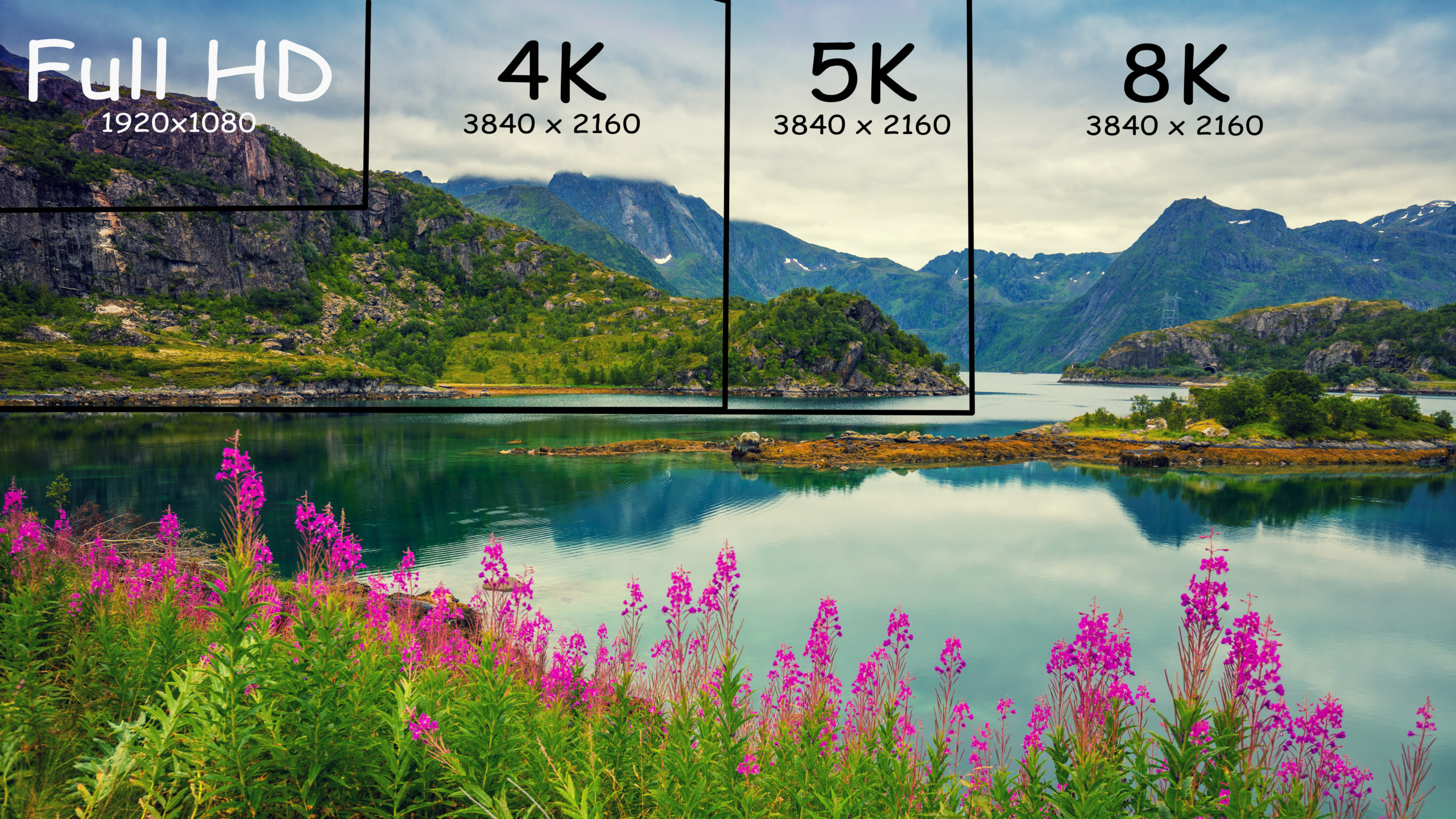
4K video, also known as ultra-high-definition (UHD) video, is a format that offers a higher resolution than traditional high-definition (HD) video. While HD video has a resolution of 1920 x 1080 pixels, 4K video has a resolution of 3840 x 2160 pixels. This means that 4K video has four times the number of pixels as HD video, which results in a much sharper and more detailed picture.
What Does 4K Video Mean?
The “4K” in 4K video refers to its horizontal resolution: about 4,000 pixels from side to side. The “K” stands for kilo, or thousand. Older formats were named for their vertical pixel count (720p, 1080p), so you’ll sometimes see 4K labeled 2160p instead.
There are actually two common versions of 4K. Consumer 4K, or UHD, measures 3840 x 2160 and is what you’ll find on TVs, monitors, phones and streaming platforms like YouTube. Cinema 4K, or DCI 4K, measures 4096 x 2160 and is the standard used in professional film production and theater projection. When a camera, TV or video platform says “4K,” it almost always means UHD.
The Advantages of 4K Video
One of the main advantages of this type of video is its improved picture quality. The higher resolution allows for more detail to be captured and displayed.
In addition, 4K video is often paired with a wider color gamut and higher dynamic range (HDR), which can produce more vibrant and lifelike colors.
For businesses, the biggest benefits often show up behind the scenes, in the editing room:
- More flexibility in editing. Because 4K has four times the pixels of 1080p, an editor can crop in to create a close-up or reframe a shot and still deliver a sharp HD video. One camera angle can do the work of two.
- One shoot, many formats. A horizontal 4K frame has enough detail to cut vertical and square versions for Instagram, TikTok and LinkedIn without the footage looking soft.
- Sharper HD deliverables. Footage shot in 4K and exported at 1080p often looks crisper than footage shot in 1080p to begin with.
- High-quality still images. A single 4K frame is roughly 8 megapixels, so you can pull usable stills from your video for thumbnails, social posts or your website.
- A longer shelf life. As 4K screens become the norm, footage shot in 4K today will still look current when you reuse it in a year or two.
The Disadvantages of 4K Video
However, there are also some disadvantages to this type of video. One of the biggest challenges is the amount of data that 4K video requires. A single minute of 4K video can be several times larger than the same clip in HD.
The numbers add up quickly. YouTube recommends uploading standard-frame-rate 4K video at 35–45 Mbps, which works out to roughly 15–20 GB per hour of finished footage. Raw camera files are often larger still, so 4K projects need fast memory cards, plenty of drive space and a computer powerful enough to edit smoothly.
Viewers feel the difference too. Netflix recommends a download speed of 15 Mbps or higher for 4K streaming, compared with 5 Mbps for 1080p. Anyone watching on a slow or crowded connection will likely be served a lower-resolution version anyway.
In addition, to view a 4K video, you need a device that has a 4K display and an ultra-high-definition video player. Not all TVs and monitors support 4K, and not all players can handle these types of video files. On the other hand, not all content is available in 4K, so you may not have access to as much 4K content as you would with HD.
Frequently Asked Questions About 4K Video
Is 4K the same as UHD?
Nearly. UHD (3840 x 2160) is the consumer version of 4K used by TVs, monitors and streaming services. True cinema 4K (4096 x 2160) is slightly wider. In everyday use, “4K” and “UHD” refer to the same thing.
Is 4K the same as 2160p?
Yes. 2160p describes the same consumer 4K resolution by its vertical pixel count, following the naming pattern of 720p and 1080p.
Can you watch 4K video on a 1080p screen?
Yes. The video will play, but it’s scaled down to your screen’s resolution, so you won’t see the extra detail. Downscaled 4K can still look slightly sharper than native 1080p footage.
Is 4K worth it for social media videos?
Shooting in 4K is often worth it, even for social. It lets editors crop horizontal footage into vertical and square formats without losing sharpness. The final upload doesn’t always need to be 4K, since many viewers watch on phones.
Does 4K video use more data?
Yes, significantly more. 4K files are several times larger than 1080p files, and streaming 4K requires a faster internet connection than streaming HD.
To Conclude
Overall, 4K video offers improved picture quality and more immersive viewing experiences, but it also has some challenges and limitations. Whether or not it is right for you will depend on your individual needs and preferences.
One of the many creative services Corkboard Concepts offers is in-house videography. As a full-service digital marketing agency, we offer our clients creative digital services designed to enhance their brand and create a better brand sentiment. If you need videography services for your business, reach out to us today!